



It does not receive public funding
Editor in chief:
CLARA MOSCHINI
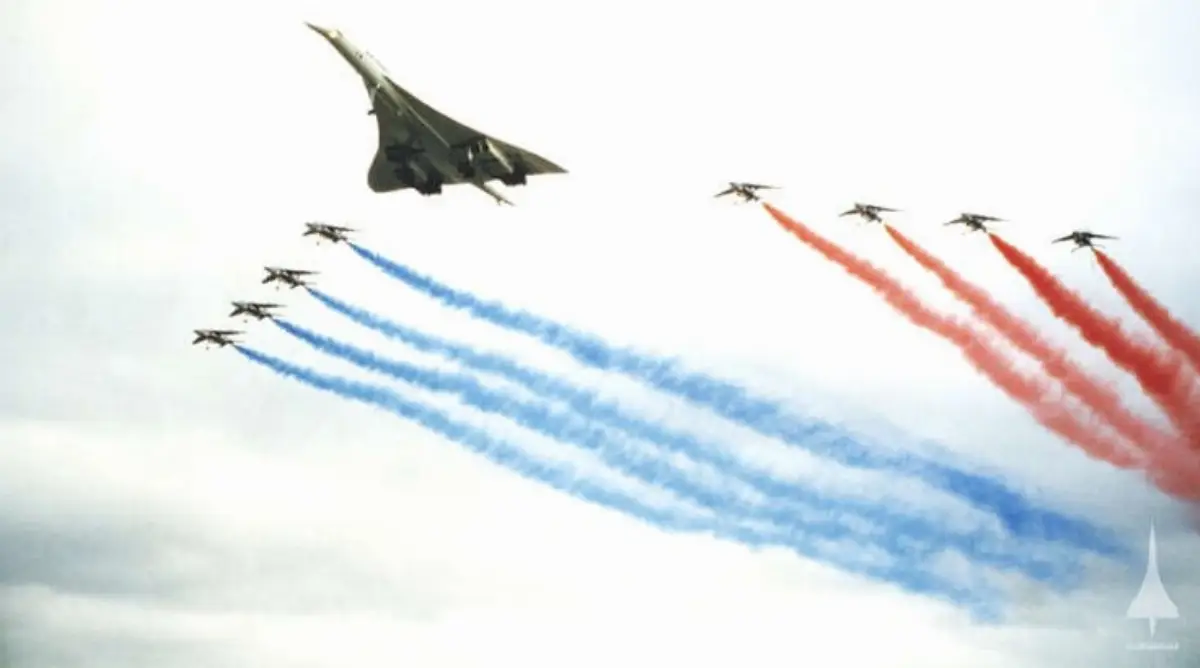
On Wednesday 21 January 1976, at 12:40pm, the Air France Concorde aircraft, registration F-BVFA, made its first commercial flight to Rio de Janeiro, with a stop-over in Dakar. After a flight time of just 7 hours and 26 minutes, Air France inaugurated its supersonic era, which would continue for 27 years, until May 31, 2003.
With a cruising altitude of around 60,000 feet –twice as high as other long-haul airplane– passengers were able to admire the Earth’s curved horizon through the windows.
With a seat capacity of 100, the Concorde reached a cruising speed of Mach 2.02, or 1,350mph. Its sleek, unique and instantly recognizable silhouette featured a wingspan of 84 feet, a length of 204 feet, and a height of 37 feet.
A genuine technological showcase and masterpiece of innovation, the Concorde is a legendary aircraft that embodies Air France’s aeronautical excellence. This pivotal chapter in the airline’s history has left a lasting technological and cultural imprint. A symbol of Franco-British expertise, it remains today a major reference of Air France’s identity –a precious heritage and an endless source of inspiration shaping innovation and the contemporary customer experience.
On the occasion of the 50th anniversary of Concorde’s first commercial flight, Air France also honors the memory of the 109 victims of the tragic accident of July 25, 2000, and extends its thoughts to their families and loved ones.
Below, a photo gallery and two videos: the first on its history and the second one about its anniversary: