


It does not receive public funding
Editor in chief:
CLARA MOSCHINI
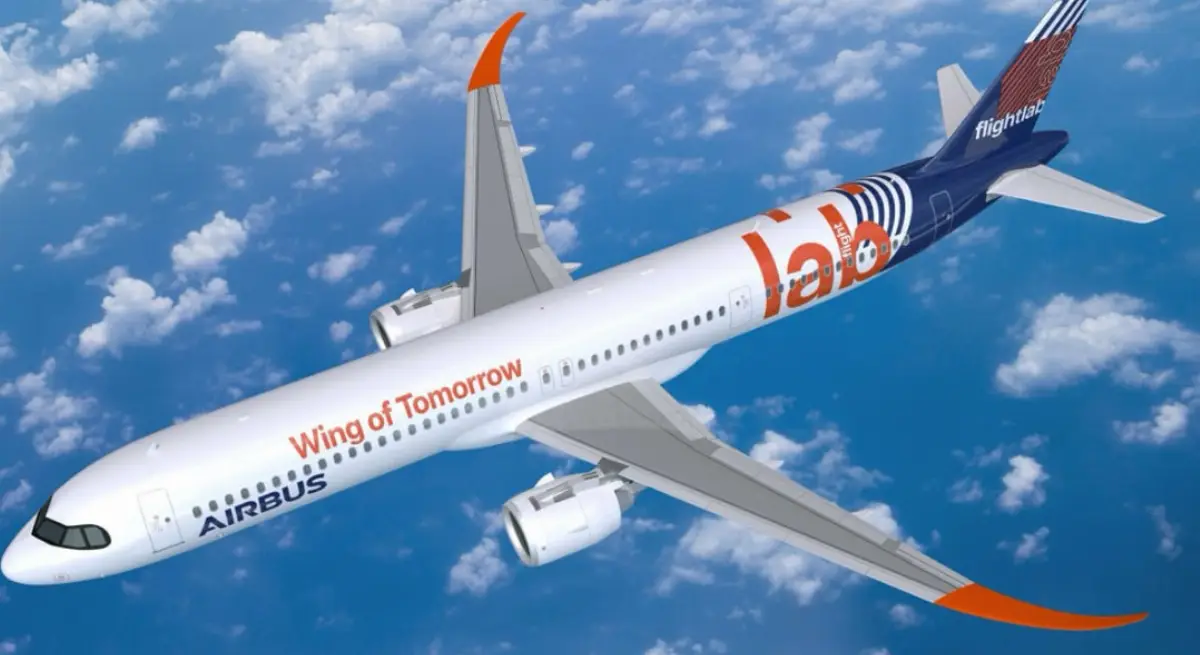
Airbus is launching a new flight-test campaign to evaluate the performance of high-span wings for next-generation single-aisle aircraft, marking the next phase of one of its largest research and technology programmes, "Wing of Tomorrow".
Over the next three years, Airbus will design, build and flight test full scale wing extensions. These will be installed on an A-321neo aircraft and used to evaluate how the different wing geometries perform in real flight conditions.
The extensions, each measuring several metres, will replicate a folding wing in the fully extended position during a flight. They will be fitted with comprehensive testing equipment to capture behaviour in flight and evaluate how the longer wingspan impacts aircraft handling.
The company is currently using advanced digital modelling and wind tunnel testing to finalise the designs of the wing extensions before they are tested in a representative flying environment. The flight data is critical to de-risk and unlock the full potential that longer wings could bring to next generation aircraft.
The programme is centred around creating longer, lighter, and more slender wings to maximise aerodynamic efficiency and reduce fuel burn. The wing extensions will be assembled at Airbus’ Wing Technology Development Centre in the UK and flight tested in Toulouse.
The industry has already built three 17-metre (ground based) wing demonstrators to explore the advantages of increased wingspan and the benefits of more than 100 manufacturing and assembly technologies.
Since 2014, the "Wing of Tomorrow" programme has been backed by £227million in funding from the Aerospace Technology Institute (ATI) programme, a partnership between the ATI, Department for Business and Trade and Innovate UK, designed to maintain the UK's position as a reference in aerospace technology.