


It does not receive public funding
Editor in chief:
CLARA MOSCHINI
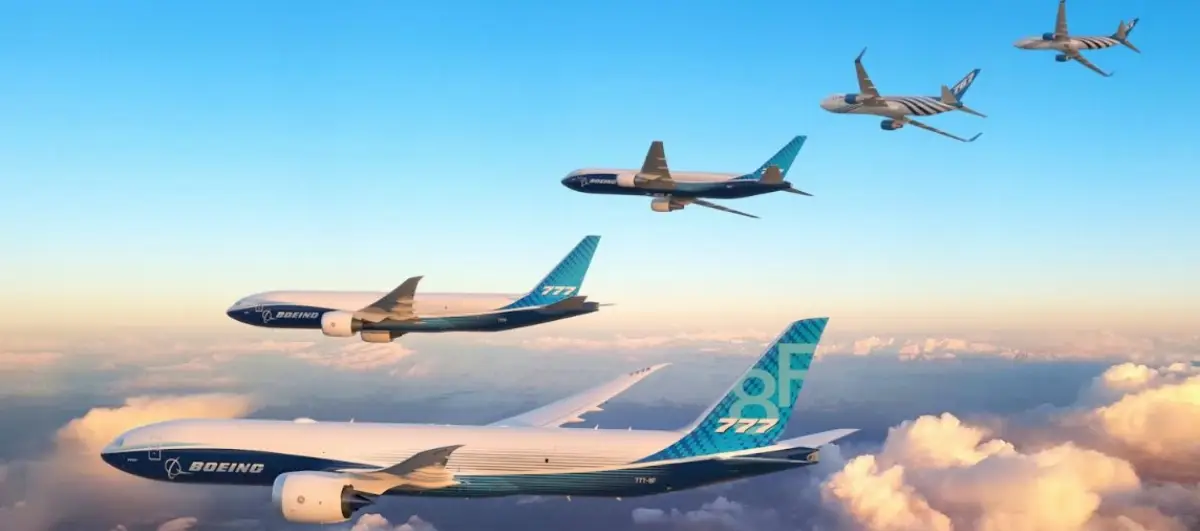
Nearly 3,000 new and converted freighters will be required over the next 20 years
Boeing projects in its 2026 World Air Cargo Forecast that air cargo traffic will double over the next 20 years, driving the freighter fleet to exceed 4,000 airplanes by 2045. Growth will be fueled by time-sensitive shipments for advanced manufacturing and AI hardware, diversifying supply chains and rising e-commerce volumes as carriers adapt route networks to shifting trade lanes and manage geopolitical disruptions.
The industry released its biannual forecast yesterday at "The International Air Cargo Association's Air Cargo Forum" in Miami. The 20-year forecast examines major air trade markets, industry trends and the future development of the global freighter fleet.
The company projects in its 2026 World Air Cargo Forecast that air cargo traffic will double over the next 20 years, driving the freighter fleet to exceed 4,000 airplanes by 2045.
Market snapshot
Record traffic: Global air cargo traffic reached a new annual record in 2025, growing nearly 5% year over year from 2024, despite trade volatility and geopolitical disruptions.
Network resilience: Air cargo networks are adapting to changing trade flows, rerouting challenges and shifting production locations while continuing to provide speed, reliability and security.
Key demand drivers: E-commerce, direct-to-consumer business model and demand for high-tech goods are fueling air cargo growth. According to IATA (International Air Transport Association), more than 70% of AI-related goods were transported by air in 2025.
World Air Cargo Forecast highlights and insights
Fundamentals: Structural growth drivers and proven resilience are expected to support air cargo traffic growth of 3.5% annually over the next two decades, outpacing long-term economic and trade growth. Trade flows touching Asia will lead growth and represent approximately 60% of the global market.
Freighter fleet growth: The worldwide fleet is expected to grow 67% by 2045 from 2,395 airplanes in 2025 to 4,010 airplanes. Dedicated freighters are expected to carry more than half of global air cargo traffic in the long term.
Growth and replacement: Operators will need 2,930 new and converted freighters over the next 20 years to support traffic growth and replace retiring airplanes. About 55% of deliveries will add capacity; approximately 45% will replace older, less efficient freighters. Two-thirds of deliveries will be converted passenger airplanes and the remainder will be new-production freighters.
Market mix: Nearly one-third of all air cargo revenues are earned by airlines with passenger belly cargo capacity as well as dedicated main deck freighters to serve a broad network and diverse markets. Growing demand for express services will lift integrators' (time-definite and express operators) share of global air cargo traffic to nearly 25% in 2045.
About the global air cargo market
Goods transported by air tend to be perishable, high-value and time-sensitive. Though they represent less than 1% of global trade by volume, they account for roughly one-third of global trade value.
Approximately 55% of global air cargo traffic, measured in cargo tonne-kilometers, has historically been transported by main-deck freighters, underscoring the importance of dedicated aircraft to global trade.
In 2025, airlines with freighter operations, including cargo-only and passenger airlines, accounted for approximately 90% of air cargo industry revenue of approximately $170 billion.