


It does not receive public funding
Editor in chief:
CLARA MOSCHINI
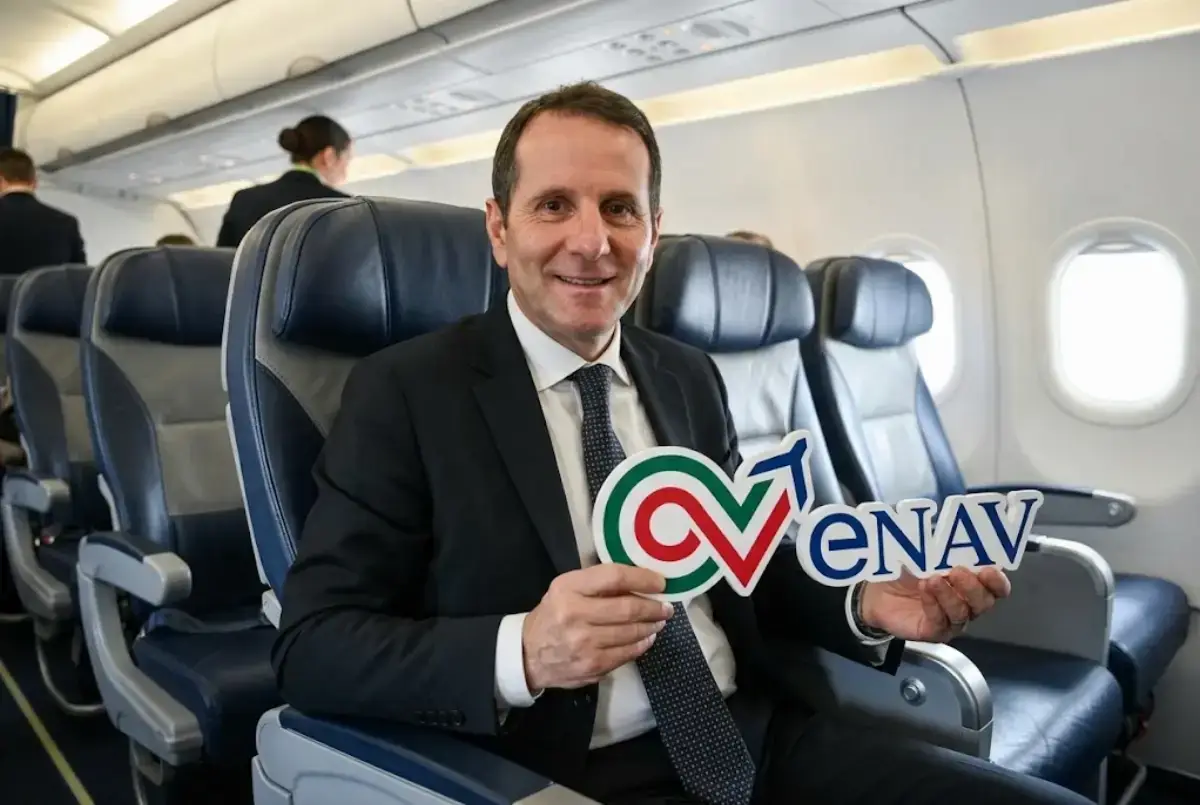
Lufthansa sinks into debt and cuts a thousand jobs. But in Rome, they are toasting amid parties and golden chairs
While Frankfurt burns through €180 million in nine months and presents the bill to workers, the ITA Airways operation reveals the most jarring side of crony capitalism: glossy photos, paid dual appointments and deafening silence over the future of those who keep the aircraft flying.
In the end, the iron law of European air transport never disappoints: when the accounts plunge into the red, sacrifices trickle downwards; when power and visibility are to be divided up, privileges rise to the top. On one side is Lufthansa Airlines, the beating heart of the German giant, which closes the first nine months of 2026 with an operating loss of €180 million —€20 million burned every month— and responds with the only move it knows: 1,000 cuts across its Frankfurt and Munich hubs. On the other is the Italian subsidiary acquired for hundreds of millions, ITA Airways, where the narrative appears to operate on a parallel planet of celebrations, institutional smiles and multiplying appointments.
In Frankfurt, management hides behind the usual list of excuses —jet fuel made more expensive by the Iran crisis, nine days of strikes, spiralling costs— to justify yet another round of cuts after two years of turnaround plans that proved to be little more than a drop in the ocean. Yet while the German parent company demands blood, sweat and tears from its 40,000 employees, its Italian campaign, with the acquisition of a 41% stake in ITA Airways, continues amid pats on the back and management decisions that are astonishing for their timing and sensitivity.
It is enough to look at what is happening at the top of the Italian airline to grasp the contradiction. While official channels and Rome’s social circles are filled with photographs of events, toasts and ribbon-cutting ceremonies celebrating the new course, ITA Airways’ chairman, Sandro Pappalardo, offers a textbook example of how, in Italy, one chair is never enough: in addition to chairing the airline — already under scrutiny over exemptions relating to remuneration — in 2026 he also took on the chairmanship of ENAV, the Italian company responsible for air traffic control. Two high-profile chairmanships, two cumulative pay packages, an institutional conflict between the controller of the skies and a controlled airline that elsewhere would set alarm bells ringing, yet here it passes almost unnoticed amid general silence.
And it is precisely in the face of this spectacle that the most uncomfortable question arises, the one nobody in the upper echelons seems willing to ask: who is thinking about the workers?
While positions are accumulated and photographs are posed for in Rome, and letters of dismissal disguised as “reductions in full-time equivalent positions” are signed in Frankfurt, thousands of ground staff, technicians, cabin crew and pilots remain hanging by a thread. In Germany, the cuts are already in black and white; in Italy, behind the façade of group synergies and industrial relaunch, the spectre of rationalisation measures, redundancies and pressure on workers’ rights is just around the corner. Because when a group loses €180 million in nine months, the bill eventually comes knocking at every door in the empire. And one can safely bet that those who will pay it will not be the people accumulating chairmanships, but those who keep airports running and aircraft flying every day.