



It does not receive public funding
Editor in chief:
CLARA MOSCHINI
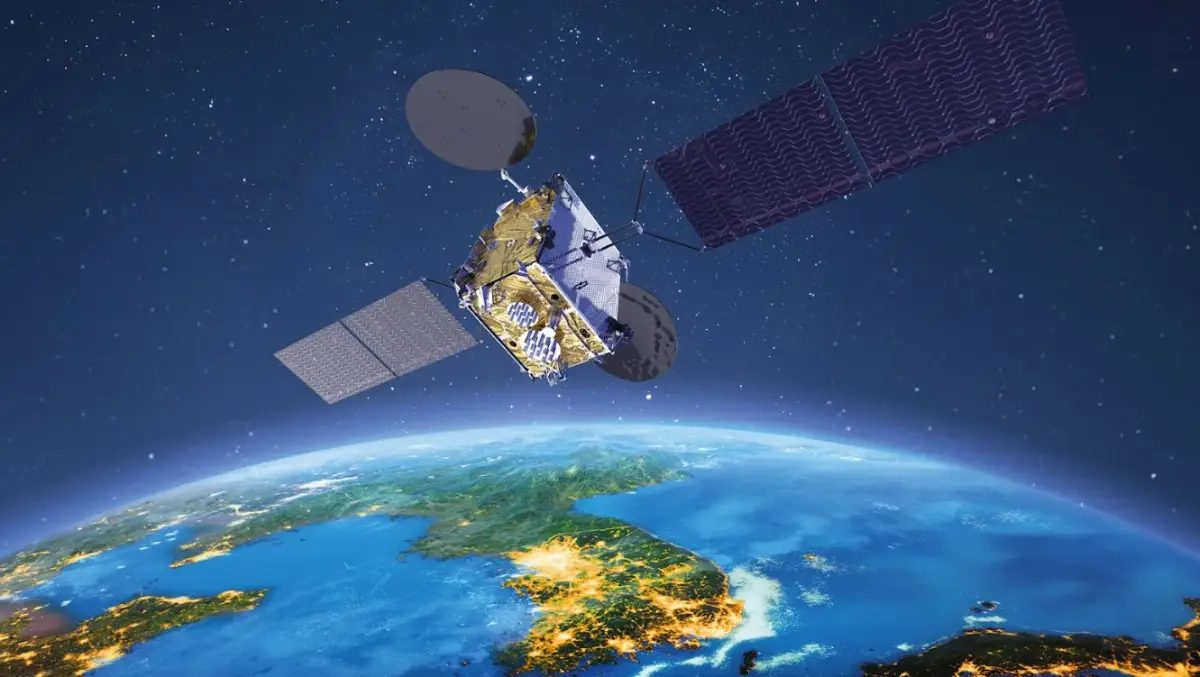
The Koreasat 6A communications satellite was successfully launched yesterday by a SpaceX Falcon 9 from Cape Canaveral, Florida.
Ordered in 2022 by KT SAT Corporation Ltd. (KT SAT), South Korea’s national satellite communications operator, Koreasat 6A was designed and developed by Thales Alenia Space (TAS), the joint-venture between Thales (67%) and Leonardo (33%). As prime contractor, TAS was in charge of the design, construction, assembly, integration and testing of the satellite, as well as overseeing launch preparations. The company is also responsible for satellite positioning and in-orbit checkout, and will be providing operational support over its nominal 15-year service life.
Based on Thales Alenia Space’s Spacebus 4000B2 platform, Koreasat 6A will replace the Koreasat 6satellite currently in orbit, delivering fixed and broadcast satellite services to South Korea from its geostationary orbital slot at 116° East.
Koreasat 6A will also make a key contribution to improving the positioning accuracy and reliability of theKorea Augmentation Satellite System (KASS) with its Satellite-Based Augmentation System (SBAS)payload. Comparable to Europe’s EGNOS system, KASS was developed by Thales Alenia Space in partnership with the Korean space agency KARI. KASS entered operational service at the end of 2023.
Initially dependent on the MEASAT-3D geostationary satellite, KASS will now be relying on Koreasat6A’s services to enhance positioning performance of Global Navigation Satellite Systems (GNSS) in a range of sectors, notably air navigation. Ultimately, these services will be extended to other applicationslike overland transportation, shipping and location-based services (LBS).