



It does not receive public funding
Editor in chief:
CLARA MOSCHINI
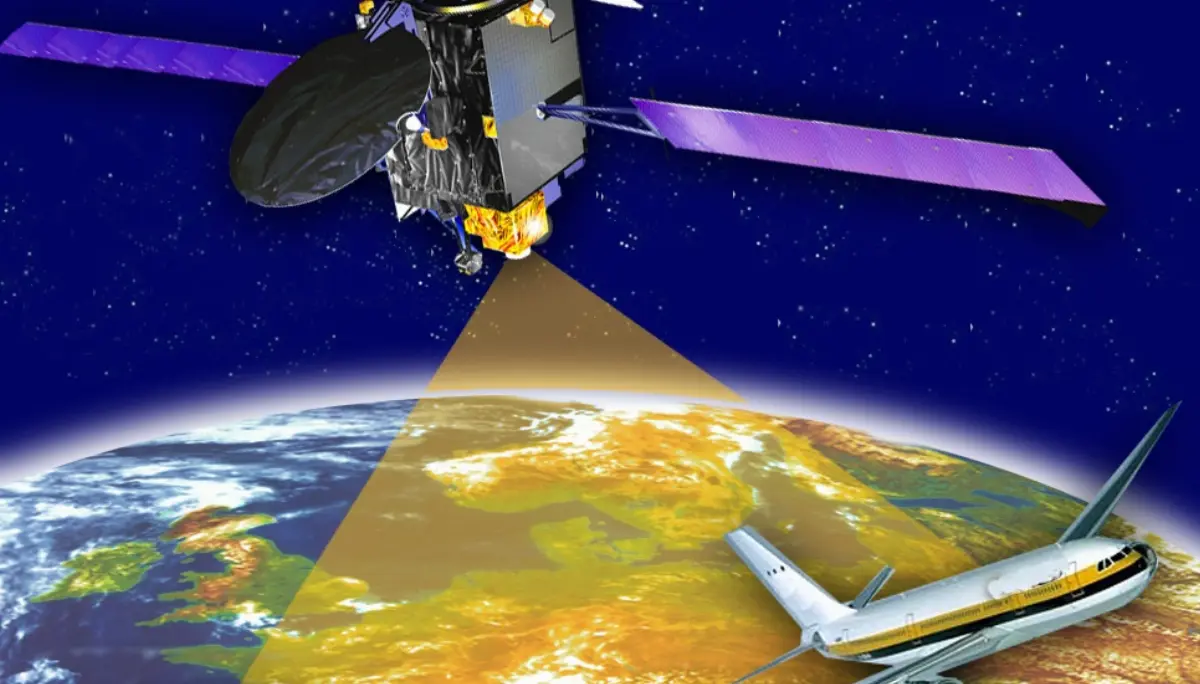
Thales Alenia Space (TAS), a joint venture between Thales (67%) and Leonardo (33%), has signed a new contract worth €51 million with the European Union Agency for the Space Programme (EUSPA) to extend the operational life of the European Satellite Based Augmentation System (EGNOS). Named LIFEX 1 (Life Extension Phase 1), this contract will ensure that EGNOS V2 continues to provide reliable, secure, and high performance navigation services for Europe’s aviation, maritime, land transport, mapping and agricultural sectors beyond 2028.
The system enhances the accuracy, reliability and integrity of positioning signals by improving the performance of Global Navigation Satellite Systems (GNSS), such as GPS and, in the future, Galileo. As part of this contract, TAS will address EGNOS V2 critical system upgrades and infrastructure improvements, reinforcing the system’s resilience and operational durability. These updates will focus on enhancing security measures, modernizing components, and ensuring the ongoing reliability of EGNOS’s “Safety of Life” service, which plays a key role in aviation, enabling accurate approaches at European airports without requiring ground guidance systems. Operational since 2011, this service has significantly improved operational safety and efficiency for the greater benefit of European operators.
EGNOS is one of the European Union’s flagship space programs, designed to improve the performance of Global Navigation Satellite Systems (GNSS), such as GPS and, in the future, Galileo. It enhances the accuracy, reliability, and integrity of satellite positioning signals, ensuring more precise and dependable navigation data for a wide range of industries. Its “Safety of Life” service is essential for aviation, enabling precision approaches to airports without requiring traditional ground-based guidance systems. First deployed in 2005 and providing operational “open” service since 2009, the current EGNOS system was developed by Thales Alenia Space as prime contractor and is managed by the European Union Agency for the Space Programme (EUSPA).