



It does not receive public funding
Editor in chief:
CLARA MOSCHINI
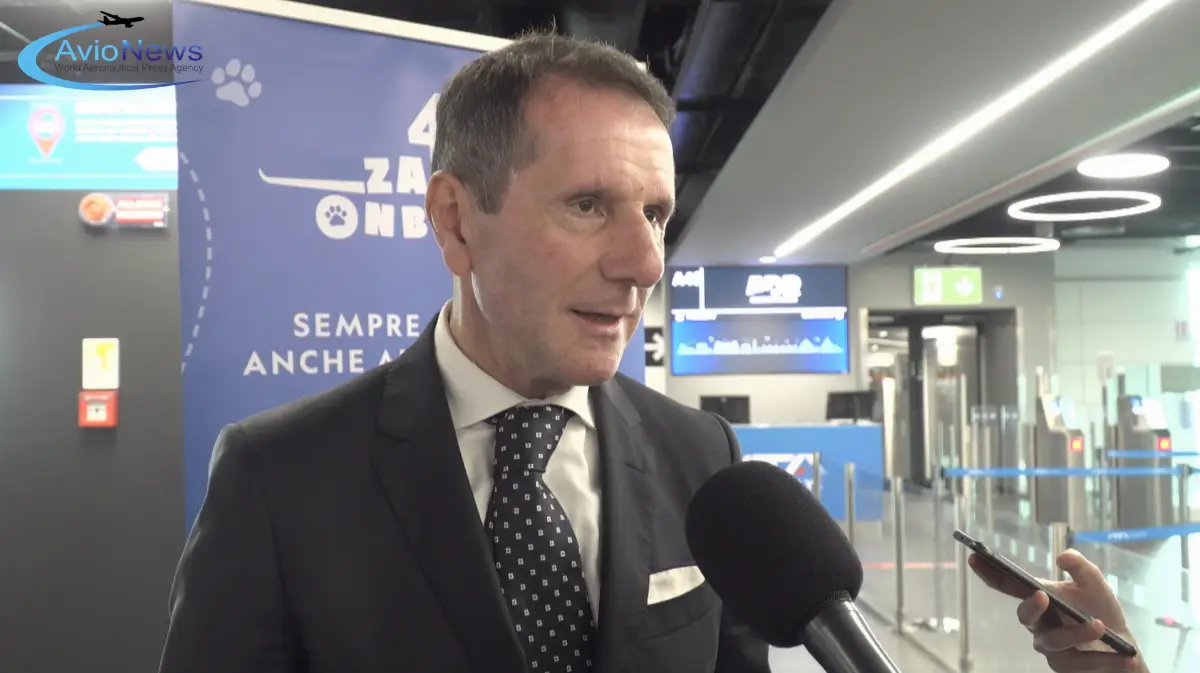
Listening to Sandro Pappalardo at the recent "Abruzzo Economy Summit", there are no longer any "Serie B" clouds in the Italian sky. No airport is "minor", no airfield is to be overlooked; every single one is equally indispensable for bringing experience-seeking tourists to the country's most intimate and remote regions. An apology for widespread regional landings and off-season tourism that warmed the crowd in Pescara, won over by a vision of hierarchy-free mobility operating in perfect harmony with the railways. A fascinating thesis—were it not for the fact that industry insiders are left with an almost metaphysical doubt regarding which "hat" the speaker was wearing on stage.
Indeed, in the event's coverage, Pappalardo is cited as the Chairman of ITA Airways. A role he holds, to be sure. It is just a pity that, in the meantime, he has also become the Chairman of ENAV, the Italian company managing and controlling air traffic. And this is precisely where curiosity kicks in: is this vision of an Italy dotted with airports—all equally strategic—the reflection of the airline operator (ITA) or the manifesto of the sky controller (ENAV)?
If it is the airline chairman speaking, the statement is bordering on miraculous. One is left wondering with how many—and which—aircraft the flag carrier intends to cover routes to every single local airport, much to the delight of the company's balance sheets and traffic flows that are usually concentrated on major hubs.
If, on the other hand, it is the chairman of ENAV speaking, the remark becomes considerably more understandable. For those managing control towers and radar systems, every open runway represents assisted flights, routing fees, and kilometers of airspace to oversee. In that case, long live the absence of minor airports: the more flights everywhere, the wider the controller smiles. Not to mention the dramatic finish on integration with Ferrovie dello Stato (Italian State Railways), described as "not a competitor, but a partner" to collaborate with in order to pick up tourists "right from their living rooms".
In short, an idyllic picture where commercial flights, control towers, and high-speed trains embrace for the good of experiential tourism. All that remains to be understood is whether the route plotted by Pappalardo is an industrial plan to get planes flying to small regional airports or, more simply, the wishful thinking of someone observing those skies from the top of the control tower.